Single Random Object Stratified
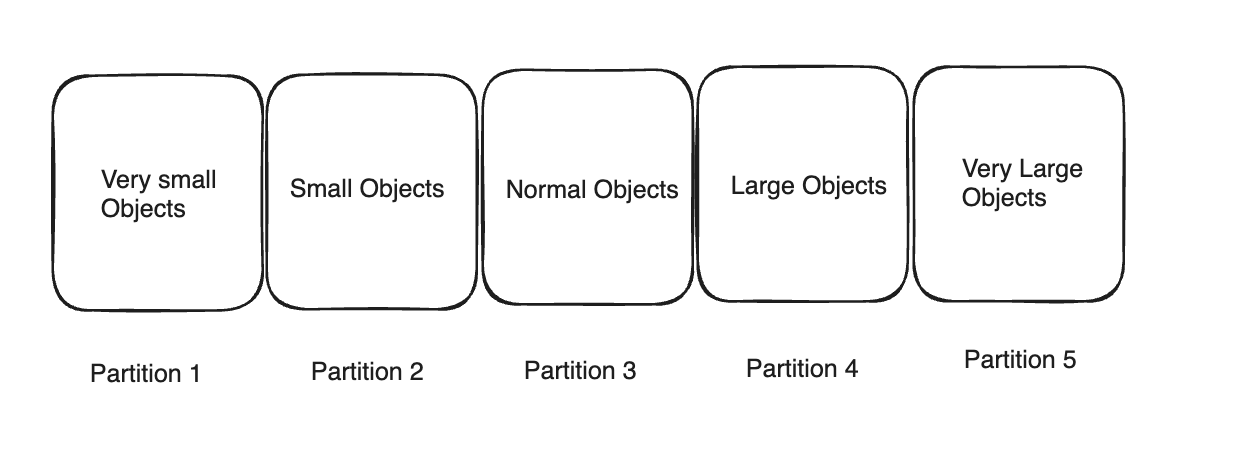
Evaluates moving a sample of objects into a container, rather than every object. Objects are grouped into similarity classes (via a partition), and the sample is drawn from those groups, drastically reducing the search space when there are very many objects.
Parameters
| Parameter | Type | Required | Default | Description |
|---|---|---|---|---|
objectsToExploreOptions | ObjectsToExploreOptions | Yes | - | How objects are grouped/selected for sampling (e.g. by the groups of a partition) |
stratifiedSampleSize | SampleSize | Yes | - | Number of objects to sample (spread across the groups) |
For sampling to be meaningful, group objects so that members of the same group have similar dimensions.
Behavior
Given a target container, the move type samples objects from each similarity group and evaluates moving the sampled objects into the container, keeping the best move. Sampling a fixed number per group keeps the number of evaluated moves small even when the total object count is huge.
Example
Configure local search to use only the single random object stratified move type,
sampling 15 objects from the groups of a "group" partition:
// Group similar objects so the sample is drawn from each group.
solver.addPartition("group", objectToGroup);

SingleRandomObjectStratifiedMoveTypeSpec stratified;

GroupList groupList;
groupList.partitionName() = "group";
ObjectsFromGroupsSpec objectsFromGroups;
objectsFromGroups.groupList() = groupList;
ObjectsToExploreOptions objectsToExplore;
objectsToExplore.set_objectsFromGroupsSpec(objectsFromGroups);
stratified.objectsToExploreOptions() = objectsToExplore;

SampleSize sampleSize;
sampleSize.defaultSampleSize() = 15;
stratified.stratifiedSampleSize() = sampleSize;

LocalSearchSolverSpec localSearch;
localSearch.moveTypeList()->push_back(
    ProblemSolver::makeMoveTypeSpec(stratified));

solver.addSolver(localSearch);
(source)